1) Choose your colour/colours.
2) Get a bowl of warm soapy water and a tray.
3) Tear off small pieces of felt and lay them all in in the same direction in the tray.
4) Lay some other pieces going the opposite way.
5) Repeat this until it looks fairly thick.
6) Pour soapy water over the felt until it is all wet.
7) Rub over the felt with bubble wrap to make sure it all sticks together.
8) Keep going over the steps until your felt is as thick as you want it to be.
I don't think i would be able to use felt on my shoe because it wouldn't work for what i want.
Showing posts with label Artefact. Show all posts
Showing posts with label Artefact. Show all posts
Tuesday, 7 December 2010

Tuesday, 30 November 2010
The Wellington boot, is a type of boot based upon leather Hessian boots. They were popularised by the 1st Duke of Wellington. This novel "Wellington" boot then became a fashionable style worn by the British aristocrary in the 19th century.Wellington boots are waterproof and are most often


made from Rubber or PVC. They are usually worn when walking on wet or muddy ground, or to protect the wearer from heavy showers.
Tuesday, 16 November 2010
Trip to Florida shoes..
Today we went to the shoe factory in Norwich. I thought the experience was useful because it will help me put my shoe together. Also the trip will help my shoe because i now about different colours and textures.
Facts
These are the steps of how to make a shoe;
Facts
- 1400 pairs sold a week.
- make bags to match some shoes.
- 4 1/2 size used for prototypes/models.
- people 45+ wear them.
- the company started in the 1900's.
- the only shoe company who uses the ion technology which makes shoes 100% waterproof.
- 99% of the shoes come from India and China.
- the shoe boxes are flat packed and imported from China. they are then given to the prisoners in Norwich prison who make them up.
- they use pantone (universal colour chart/book) to order colours from other countries.
- their materials mainly come from Italy and China.
These are the steps of how to make a shoe;
- find the latest trends from magazines.
- create a mood/theme board.
- sketch out the design.
- print the design on a VAC.
- design scanned into the computer and sent to the papaer cutter.
- the paper cutting machine has three things; a paper cutter, plastic cutter, and a pen.
- design is sent to the factory floor where a man uses the templates to cut around the material cith a clicker.
- next the ladies sow all the material together.
- heat is used to form the heel.
- the sole is stuck on with strong glue.
- nail the heel on.
- a flame is used to burn off any excess fibers and a cloth is used to clean them.
- the bottoms are roughed.
- a soft lining is attached inside.
- the shoes are packaged up.
 |
| Pantone Colour Chart |
 |
| A an using a clicker to cut some leather. |
 |
| Cutting Table |
Sunday, 14 November 2010

Tuesday, 9 November 2010
History of shoes in Norwich..
Startrite Shoes;
Startrite shoes started in 1792, the beggining of shoe making in Norwich, and is still where the headquaters is based today. James Smith was a leather worker based in a small shop behind Norwich market.
In the 19th century, James Smith’s grandson Charles Winter had inherited his commercial flair, and became the first shoemaker to use the newly invented sewing machine in the manufacture of his footwear.
Following the Great War, shoe making, along with many other industries, suffered from a lack of skilled workers and investment. Despite this, James Southall, Charles Winter’s grandson by marriage, forged ahead and opened a new and up-to-date factory on the outskirts of Norwich. Southalls began to produce footwear for children which had an entirely different shape to that made for adults, allowing room for growth. The name "Start-rite" was first used in the early 1920s by Quant & Son, a shoe retailer in Bury St Edmunds and purchased by Southalls for exclusive use in 1921. The decision was also taken at this time to concentrate on marketing and selling products, with investment in advertising and the recruitment of the company’s first London-based sales rep. Having picked up on public concerns about healthcare and particularly children’s fitted footwear, more emphasis was placed on the company’s newest children’s brand "Start-rite" with the appointment of a dedicated production manager. Southalls was the first footwear manufacturer to make a practical contribution to the prevention of damage to young feet.
In 1928, the company commissioned an investigation into schoolchildren’s feet to confirm their belief that children should be catered for differently to adults.
In 1936, the iconic twins were first famously reproduced in a series of posters and press adverts which ran through the late ’30s and ’40s, the brand is still recognised today featured at the heart of the Start-rite logo as the hallmark of well-fitted, quality shoes for children.
By the 1940s, Start-rite shoes were in such high demand that retailers were limited to strict quotas of supplies.
In 1943, James Hanly, then chairman, commissioned a nationwide survey of children’s feet with the help of medical research experts, schools and health authorities. 450 children had their feet measured and tabulated. The results proved that, whilst Start-rite shoes were better for children’s development than other brands, there was further scope for additional improvements, notably shoes which would allow tiny feet to grow through to late teenage years without damage, and the need for the shoes to be fitted by trained people.
In 1952, the company took the brave decision to stop manufacturing adult footwear and concentrate purely on children’s needs and the Start-rite brand. Huge investment was made into special lasts specifically for children’s sizes, available in multiple width fittings, and based on the natural shape of a child’s foot. The company also introduced a "heel stiffener" to help with balance and growth.
Start-rite shoes achieved another first when, as supplier of footwear to the Windsor children, it was granted the Royal Warrant by Queen Elizabeth in 1955.
By 1966, the Start-rite brand was so important to Southalls as a business that the decision was taken to officially adopt Start-rite as the trading name. As a result, both the business and brand are known as Start-rite today, although the parent company remains James Southall Ltd and both names are proudly displayed outside the Norwich head office.
The Prince of Wales granted a second Royal Warrant from 1989 until 2003 by which time Princes William and Harry had literally outgrown the brand. In all, children of the Royal family have been fitted with over 1500 pairs of Start-rite shoes.
In 1997 the Rhino sub-brand was introduced. Aimed specifically at slightly older schoolchildren, these designs recognise the increasing influence of children themselves in their parents’ purchasing. Combining the superior quality and multiple width fittings for which Start-rite is renowned, with designs for a more fashion-conscious wearer in mind, Rhino and Miss Rhino have allowed the business to expand its important Back to School offer and continue to provide Start-rite consumers with choice throughout their formative years.
Startrite shoes started in 1792, the beggining of shoe making in Norwich, and is still where the headquaters is based today. James Smith was a leather worker based in a small shop behind Norwich market.
In the 19th century, James Smith’s grandson Charles Winter had inherited his commercial flair, and became the first shoemaker to use the newly invented sewing machine in the manufacture of his footwear.
Following the Great War, shoe making, along with many other industries, suffered from a lack of skilled workers and investment. Despite this, James Southall, Charles Winter’s grandson by marriage, forged ahead and opened a new and up-to-date factory on the outskirts of Norwich. Southalls began to produce footwear for children which had an entirely different shape to that made for adults, allowing room for growth. The name "Start-rite" was first used in the early 1920s by Quant & Son, a shoe retailer in Bury St Edmunds and purchased by Southalls for exclusive use in 1921. The decision was also taken at this time to concentrate on marketing and selling products, with investment in advertising and the recruitment of the company’s first London-based sales rep. Having picked up on public concerns about healthcare and particularly children’s fitted footwear, more emphasis was placed on the company’s newest children’s brand "Start-rite" with the appointment of a dedicated production manager. Southalls was the first footwear manufacturer to make a practical contribution to the prevention of damage to young feet.
In 1928, the company commissioned an investigation into schoolchildren’s feet to confirm their belief that children should be catered for differently to adults.
In 1936, the iconic twins were first famously reproduced in a series of posters and press adverts which ran through the late ’30s and ’40s, the brand is still recognised today featured at the heart of the Start-rite logo as the hallmark of well-fitted, quality shoes for children.
By the 1940s, Start-rite shoes were in such high demand that retailers were limited to strict quotas of supplies.
In 1943, James Hanly, then chairman, commissioned a nationwide survey of children’s feet with the help of medical research experts, schools and health authorities. 450 children had their feet measured and tabulated. The results proved that, whilst Start-rite shoes were better for children’s development than other brands, there was further scope for additional improvements, notably shoes which would allow tiny feet to grow through to late teenage years without damage, and the need for the shoes to be fitted by trained people.
In 1952, the company took the brave decision to stop manufacturing adult footwear and concentrate purely on children’s needs and the Start-rite brand. Huge investment was made into special lasts specifically for children’s sizes, available in multiple width fittings, and based on the natural shape of a child’s foot. The company also introduced a "heel stiffener" to help with balance and growth.
Start-rite shoes achieved another first when, as supplier of footwear to the Windsor children, it was granted the Royal Warrant by Queen Elizabeth in 1955.
By 1966, the Start-rite brand was so important to Southalls as a business that the decision was taken to officially adopt Start-rite as the trading name. As a result, both the business and brand are known as Start-rite today, although the parent company remains James Southall Ltd and both names are proudly displayed outside the Norwich head office.
The Prince of Wales granted a second Royal Warrant from 1989 until 2003 by which time Princes William and Harry had literally outgrown the brand. In all, children of the Royal family have been fitted with over 1500 pairs of Start-rite shoes.
In 1997 the Rhino sub-brand was introduced. Aimed specifically at slightly older schoolchildren, these designs recognise the increasing influence of children themselves in their parents’ purchasing. Combining the superior quality and multiple width fittings for which Start-rite is renowned, with designs for a more fashion-conscious wearer in mind, Rhino and Miss Rhino have allowed the business to expand its important Back to School offer and continue to provide Start-rite consumers with choice throughout their formative years.
Wednesday, 3 November 2010
Shoes.
Shoe Work..
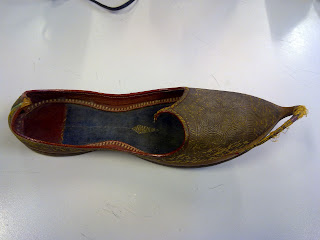
Shoe tools;
Sleek Stick - For polishing shoes.
Edge Iron - Shaping the edge of the shoe.
Heel stiffener - Used inside the shoe.
Wooden Last - For shaping the leather.
Last pliers - Used for pulling the leather.




Shoe tools;
Sleek Stick - For polishing shoes.
Edge Iron - Shaping the edge of the shoe.
Heel stiffener - Used inside the shoe.
Wooden Last - For shaping the leather.
Last pliers - Used for pulling the leather.


 |
| To help your hand when you sew. |
 |
| To hold the shoe in place. |


Tuesday, 5 October 2010
5.3 My day out in Wymondham..
Today we took a trip into Wymondham town centre, we visted our Book shop and our Charity shop.
First we went to the but shop as part of our artefact project, we found out that the shop (The Book Fountaion) sells a variety of books including; childrens books, study books and teenage books. The shop owner had been working there for five years but he said the previous owner had had the shop for around 12 years. All the books are from Britain and his suppliers are from Norwich and Sussex. We video the interview and took some pictures.
Next we went to the Charity shop (break childrens hospice) where we interviewed a few of the shop workers and were given some leaflets and information to help us with our campaign project. We also took some pictures of the stock.
We also have a video to upload on here that will give more information.
First we went to the but shop as part of our artefact project, we found out that the shop (The Book Fountaion) sells a variety of books including; childrens books, study books and teenage books. The shop owner had been working there for five years but he said the previous owner had had the shop for around 12 years. All the books are from Britain and his suppliers are from Norwich and Sussex. We video the interview and took some pictures.
Next we went to the Charity shop (break childrens hospice) where we interviewed a few of the shop workers and were given some leaflets and information to help us with our campaign project. We also took some pictures of the stock.
We also have a video to upload on here that will give more information.
Christian Louboutin
I have chosen to research Christian Louboutin's line of shoes..
 Christian was born in 1964, In 1992 he opend his first boutique in Paris. He later goes on, in 1994 to open another boutique in New York City. 1996 recieves a FFANY award for his designs. Louboutin nowwas 12 stores around the world, and had become very successful. Many famous people wear his shoes e.g; Selena Gomez, Chantelle Houghton, Madonna, Sarah Jessica Parker and Angelina Jolie.

Subscribe to:
Comments (Atom)